Meer dan 700 boeken over adoptie & opvoeding
Pas op: in de zomervakantie is boeken verzenden voor ontlening enkel mogelijk in augustus. Ophalen in juli kan wel gewoon tijdens de uren.
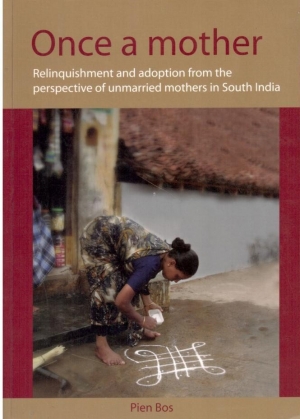
Once a mother
Relinquishment and adoption from the perspective of unmarried mothers in South India
Auteur Bos Pien
Categorie anderstalig
Uitgeverij Ipskamp BV
Isbn 9789090224534
Jaartal 2007
Dr Pien Bos researched the motivation of Indian unmarried mothers to relinquish their children for adoption.
- Her conclusion is that Indian women who relinquish their children are not well informed. They often relinquish their children because they find themselves in an environment where adoption is considered the best, if not the only solution. Often they feel they relinquish the care of the child, but not the child itself. The cultural significance of the blood bond between a mother and her child, in combination with the cultural meaning of the notion mother, implies that motherhood is not transferable.
Pien Bos argues that these mothers should be better informed about the possibilities to keep their children.
- Crucial is the role of the NGOs. Pien Bos interviewed 36 mothers in different mother and child homes in Chennai. The NGOs running these mother and child homes also have another role: placing children for adoption (in foreign countries, but more and more within in India). For adopted children these NGOs receive money, and this is, says Bos, where the situation becomes problematic. Staying in these mother and child homes is a like a trap, rarely unmarried mothers can leave with their children.
- Pien Bos lived for two years in India and her interviews with the Indian mothers give a great but disturbing insight in the lack of freedom of those mothers. And the question remains if in such an ambiguous situation, children should be placed for adoption.